Continued attacks on Gender Affirming Care & ID Laws

Hello everyone,
I am enjoying the nice weather all of a sudden. The snow is almost gone which is surprising. But it feels like spring, which is a nice change.
Right before I was about to hit send on this newsletter, a story broke by Erin in the Morning that I wanted to quickly touch on. The US 4th Circuit Court of Appeals has determined that West Virginia can deny Medicaid funding for gender affirming surgeries for transgender individuals. Specifically, they can refuse to pay for surgeries for those who have a diagnosis of gender dysphoria, even if they pay for the same treatment for individuals with other diagnoses. I have read the decision and, along with really torturing language to “prove” that they are not discriminating against transgender people, they also use Skrmetti decision, which allows states to restrict gender affirming care for youth, to justify their decision:
Among other things, quoting from Skrmetti, the court said: “And it is not irrational for a legislature to encourage citizens “to appreciate their sex” and not “become disdainful of their sex” by refusing to fund experimental procedures that may have the opposite effect” (page 27).
Concerning the use of evidence, the court said “In Skrmetti, the Supreme Court found that the Tennessee legislature did not have to take any third party—on either side of the debate—at its word to find a good reason to ban certain procedures. The legislature could look at the evidence and decide for itself which plan would best promote the flourishing of Tennesseans. If the Tennessee legislature can legitimately prohibit these treatments, then the West Virginia legislature may legitimately determine that providing Medicaid coverage for these procedures is not worth the cost to its taxpayers. Simply put, if a State can reasonably ban it, of course a State can reasonably refuse to pay for it.” (page 26)
Their final judgement is “The Supreme Court has made clear that States can reasonably regulate treatments for gender dysphoria without discriminating against any protected class, and that these regulations are not inherently irrational.” (page 35)
The main points I want to emphasize are:
This supports the idea that the states do not need to use good data or evidence to justify discriminating against transgender people.
There is a lot of concern on my end on encouraging citizens to appreciate their sex (which was said as youth appreciating their sex in the Supreme Court decision).
The impact is still unknown as it just came out, but I will be watching it closely and keeping you all updated.
This week, I would like to talk about three major updates happening that might impact your transgender clients. One is the suspension of licenses for transgender people in Kansas and the other two are continued attack of Gender Affirming Care for transgender youth in the UK and the US, the former coming from the Labour party, considered more center-left.
Driver’s License issues in Kansas
A couple of weeks ago, Kansas passed SB 244, which requires birth certificates and driver’s licenses to reflect a person’s gender assigned at birth. Any license that has been changed to reflect a transgender person’s gender identity was revoked immediately. Several other states do not allow transgender individuals to change their gender identity on official forms, but this is the first to revoke previously provided licenses. Transgender people received a letter from the Department of Revenue’s Division of Vehicles informing them that their licenses are no longer valid immediately. Due to voter ID laws, this may also make it harder for the state’s 22,000 transgender Kansans to vote in the next election. We are also seeing reports of transgender people who did not change their gender identification on their ID still get a letter saying their license has been revoked. This has led to concern around the tracking of transgender citizens of Kansas and what can be done with that information.
How does this impact your clients? If you are in Kansas, the impact is quite clear. Some of your transgender clients will have their licenses taken away, and their new licenses might have a gender that does not match their identity and their expression. That takes time and money and can be a difficult process. It may lead to a license that has a gender marker which looks different from one’s gender identity and expression, which may lead to issues. Furthermore, these types of laws are often copied and pasted in other states, so if you are in a red state, be aware that this might be coming down the pipeline.
Gender Affirming Care (GAC) for Youth in the UK
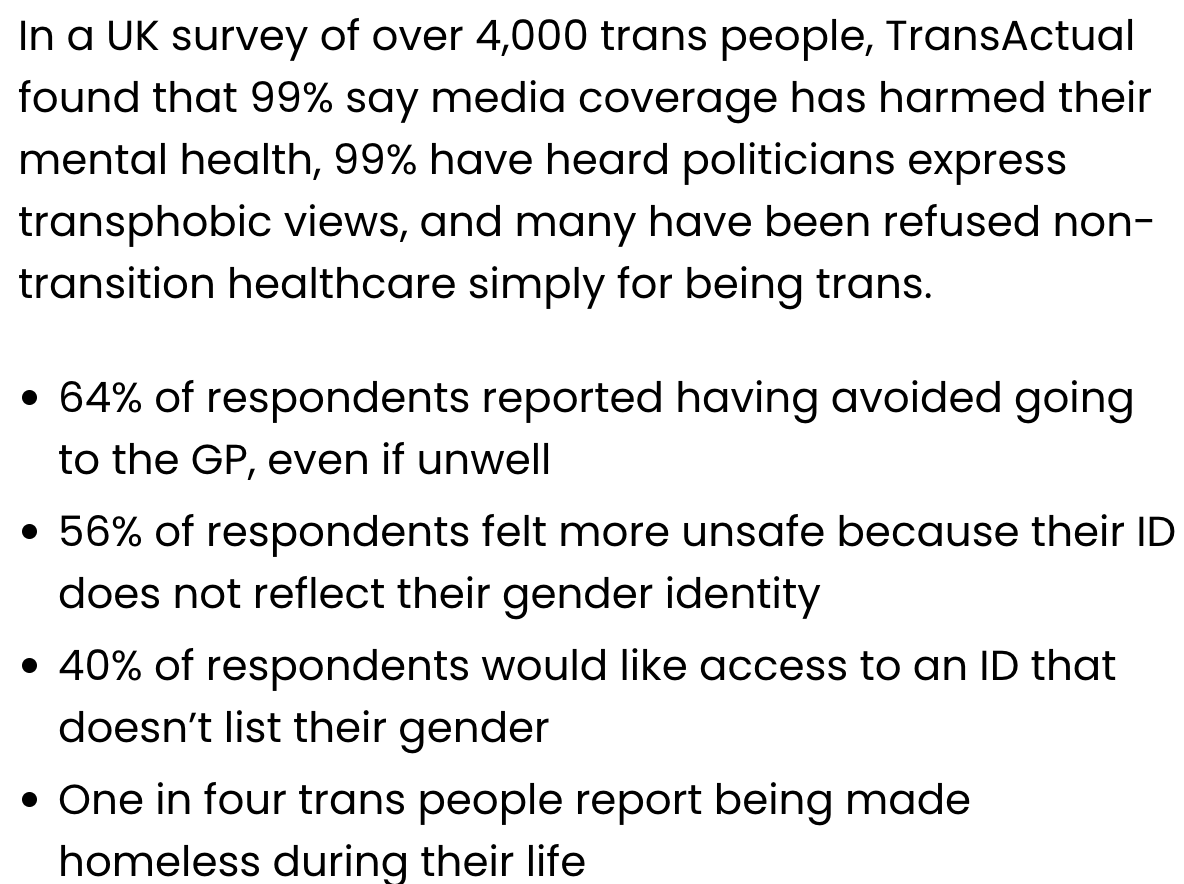
Since the Cass Report was published in 2024, there has been a direct attack on GAC for youth in the UK. Even though there have been several studies which have questioned the methodology of the Cass Report, politicians on both the left and the right have used it as a way to attack GAC. Now, the National Health Services (NHS) is pausing all hormone-based GAC for youth based on a new review that was published. The new reviews, though, exclude 97% of the articles on GAC for youth for artificial reasons. In this sense, the NHS is excluding articles so it can get to the outcome that the authors want: stopping GAC for youth. With a new review being conducted by the NHS on GAC for adults, there is a concern that it will be harder for all transgender people to get hormones as part of their transition. This comes out on the heels of a report from the UK trans-advocacy nonprofit, TransActual, which found that:
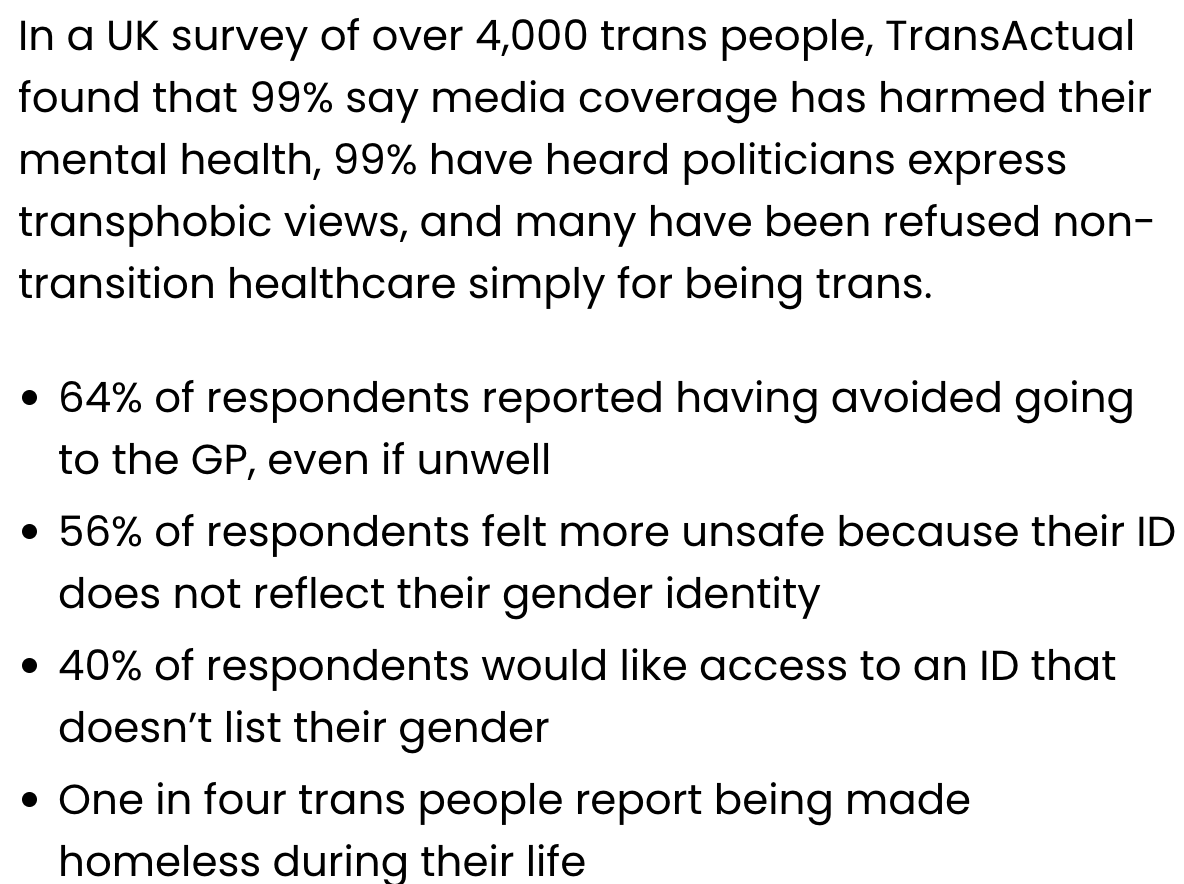
While the attacks of the transgender community in the UK is awful for those who reside in the UK, this type of “evidence” may also be used in other countries to attack gender affirming care. Staying up-to-date with these studies can help you write opinion pieces in your local newspaper and reach out to politicians when politicians use these reports to attack transgender youth. Furthermore, as shown by TransActual, we are seeing the impact of these political attacks on the mental health of transgender individuals. Checking in with your transgender youth clients and making sure they know you are a safe space is more important than ever.
Prisoners being forced off of Gender Affirming Care
According to an order from Feb 19, 2026, transgender people in prisons will no longer have access to gender affirming care. This forced detransitioning is not only immoral but may violate prisoners 8th Amendment rights. Previously, a federal judge had ordered incarcerated people whose gender affirming care was interrupted while in prison to be restarted.
Nearly 1 in 6 people who identify as transgender have been to prison, with the number being higher for transgender people of color. Considering the high number of transgender people who interact with law enforcement or are impacted by the prison-industrial complex, these rules will have a big impact on many transgender people, especially if states start implementing these anti-GAC policies as well.
I want to end with a video from the ACLU Virginia. Because we often have to focus on the attacks on the trans community, we sometimes forget about celebrating queer and trans joy.