Research Rodeo 18

Hello everyone from cold, snowy Massachusetts. Earlier this week we woke up to a couple of inches of snow and my son was so excited! As we get into the colder weather (it may not get above freezing this week!), I will be writing this while cuddled up in blankets and drinking hot cocoa and lots of tea.
This week, I am bringing in some more research! I love doing research rodeos because one of the reasons I started this blog was to make research around LGBTQIA+ peoples and communities more accessible to people. There is no specific theme to today’s Research Rodeo, just queer-focused articles that I found interesting:
Ummak et al. (2025) Unheard Voices of LGB People in Türkiye on LGB-specific Experiences of Intimate Partner Violence: A Qualitative Analysis: This article explores Intimate Partner Violence (IPV) within the LGB community, which is underdiscussed in both the IPV community and the LGBTQIA+ community.. Due to this, many people who work in IPV do not know how to support queer individuals who have been impacted. Specifically, Ummak et al. found that IPV was experienced through:
Invalidation of sexual orientation.
Controlling of sexual behavior.
Threatening to and/or weaponizing disclosing one’s sexual orientation.
Discrimination and stigmatization of bisexuality and bi-identity.
From this list, we can see how IPV might look unique for LGB individuals as it connects to identity. To better support LGB individuals, professionals should how IPV within the LGBTQIA+ community may be different and how things such as heterosexism and a lack of models of queer relationships impacts LGB individuals and their romantic relationships.
Nguyễn & Han (2025) Who’s Eating Rice? Gay Vietnamese American Men’s Experiences With (Sexual) Racism: This article explores the racism that gay Vietnamese individuals experience in the US, specifically in California. Within White queer communities, the respondents experienced both being racially fetishized for being Asian or being seen as undesirable. In reaction, the respondents looked inward, mostly focusing on building a Gay Vietnamese community. For LGBTQIA+ organizations which are mostly white, this may mean that racial minorities, like the Vietnamese respondents in this study, may not feel comfortable. Working with local groups, like gay Vietnamese groups, can help your organization figure out how to create a welcoming environment for everyone and the lived experiences of the diverse queer community.
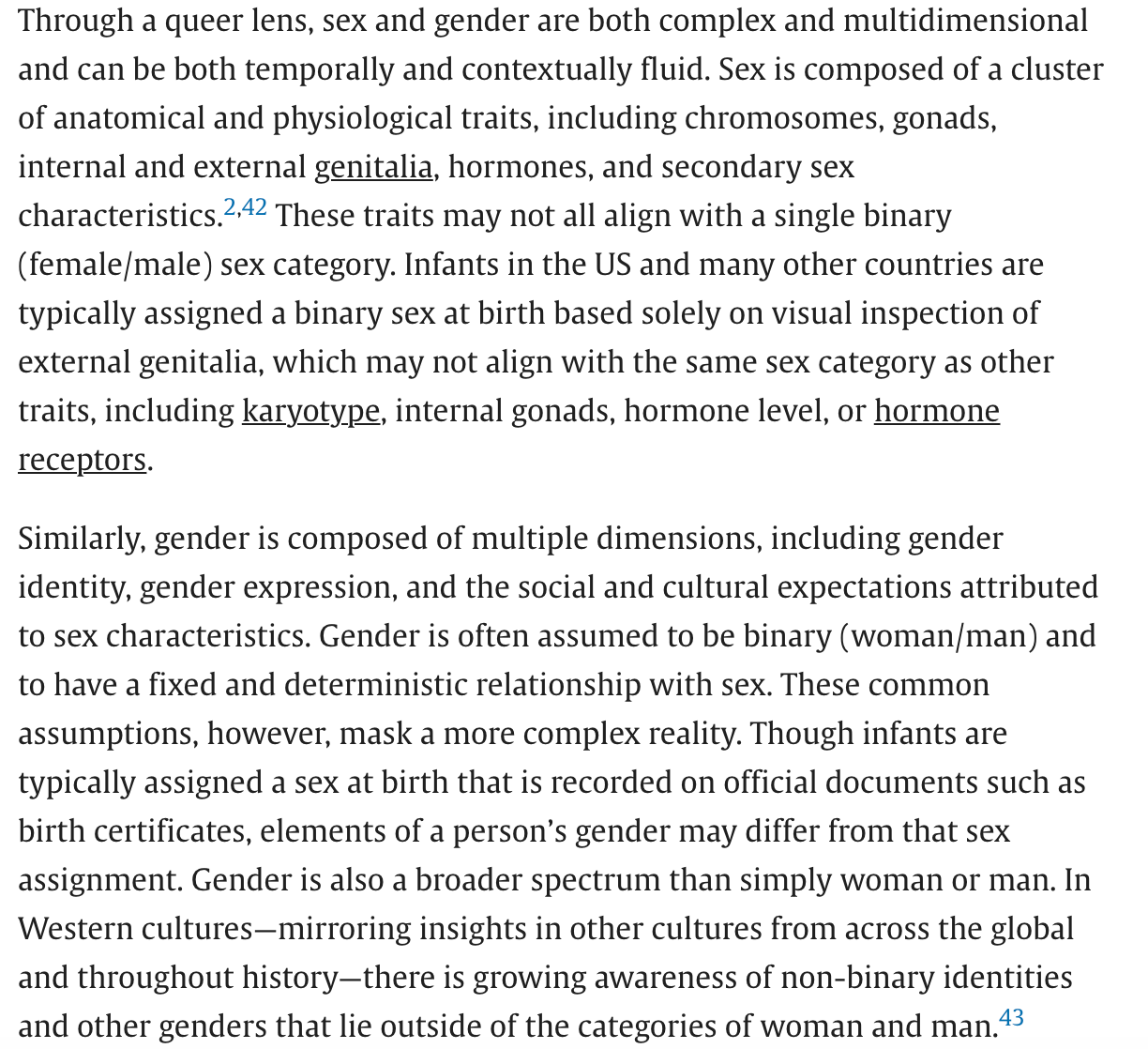
Jamal et al. (2024) Queering genomics: How cisnormativity undermines genomic science. Along with the fact that genomics is often used in laws and policies discriminating against, I found this article interesting because I used to work in neurogenetics many years ago. In this article, Jamal et al. argues that genetics has been researched inaccurately has been recording sex and gender as something binary and static. Instead:
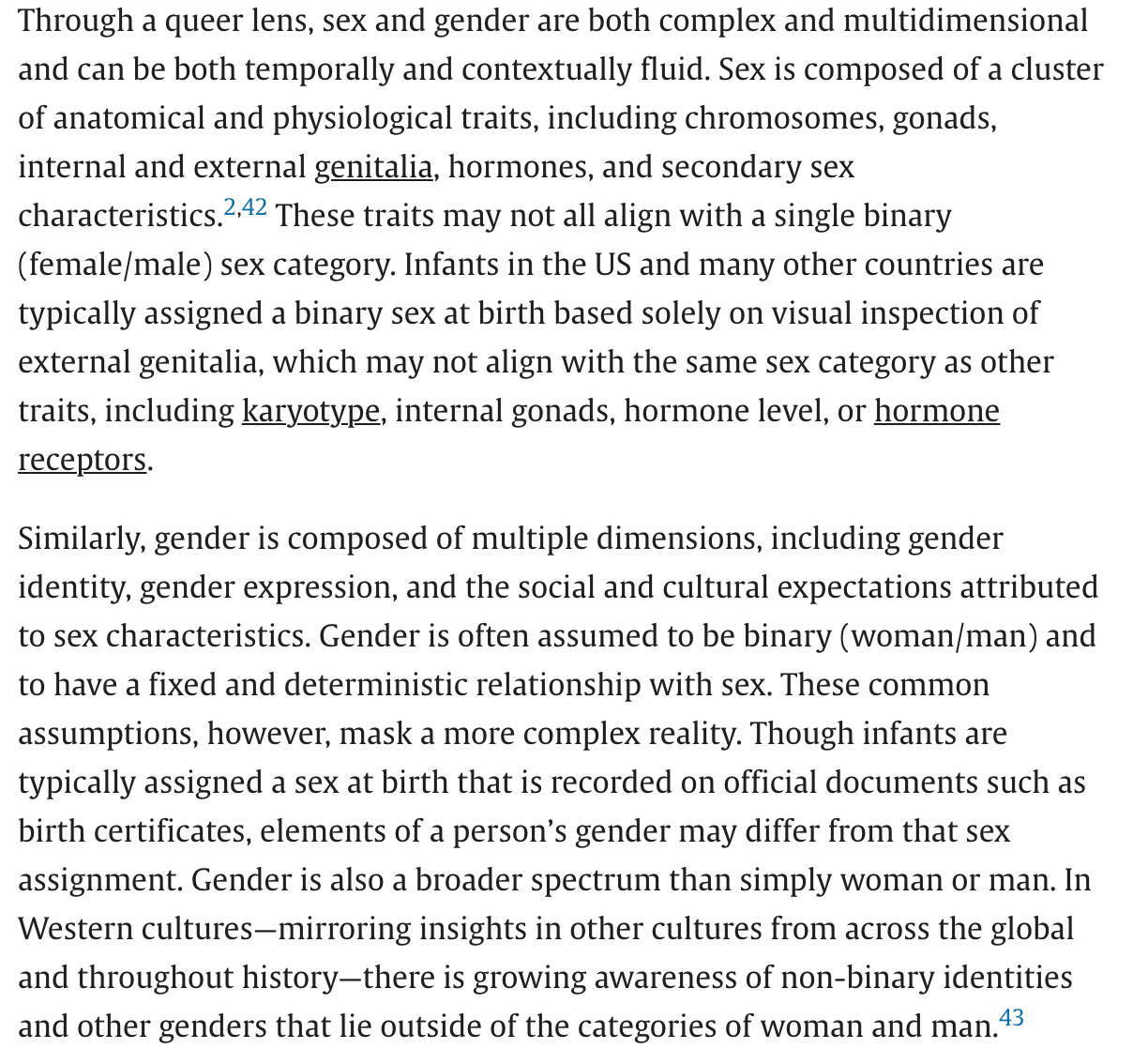
Understanding and explaining these complexities can be difficult. But it is important because genomic research, or a misunderstanding of genetics and biology, has been used to attack the transgender community. Building a better world means understanding that sex and gender are complicated from both a sociological and a biological perspective.
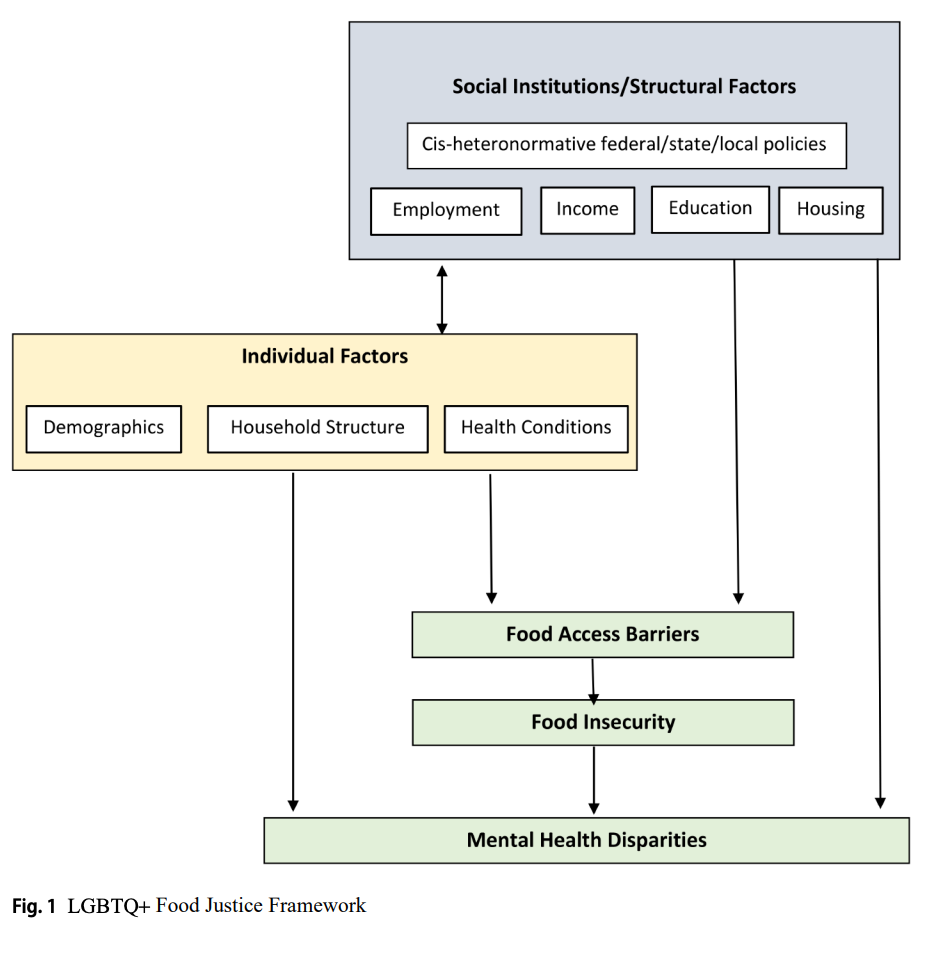
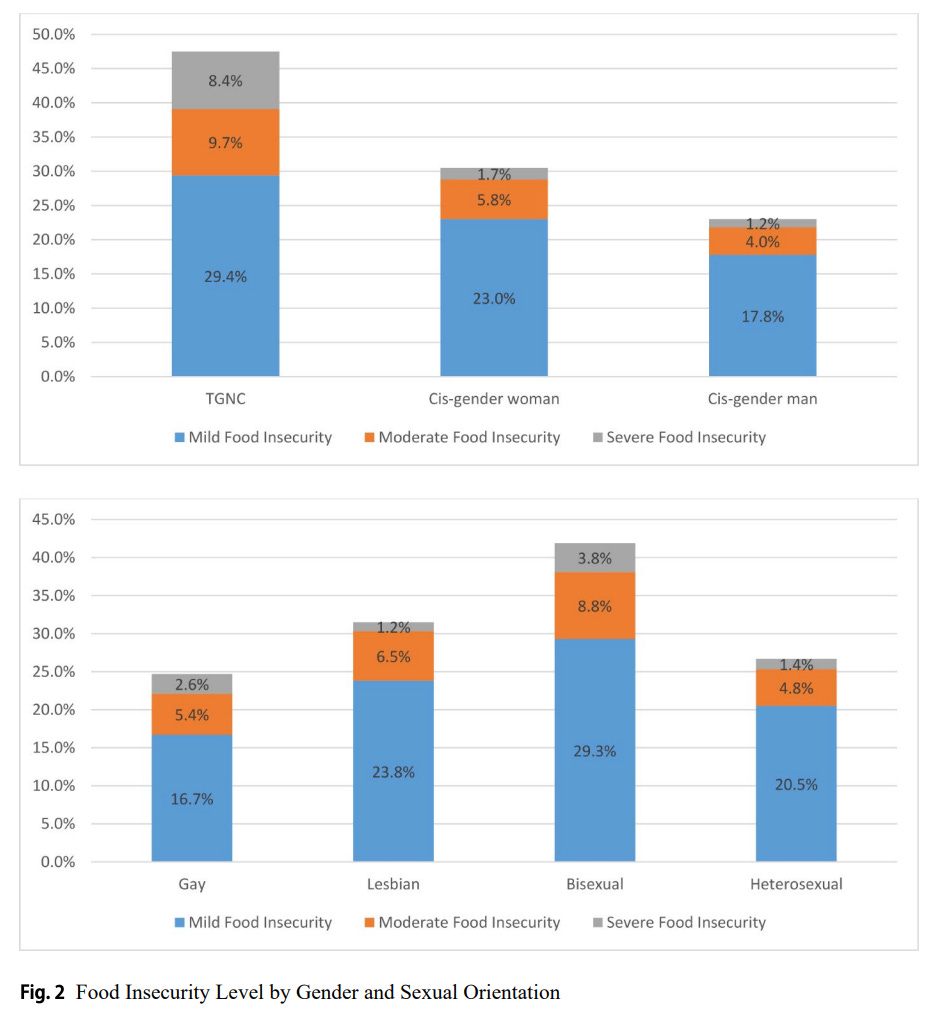
Morales (2024) The Mental Cost of Food Insecurity among LGBTQ+Americans This article explores the impact of food insecurity within the LGBTQIA+ commmunity. While the mental health aspect is the focus on the article, I think it is important to highlight the food insecurity part, because food insecurity is a major issue within the United States, especially within the LGBTQIA+ community.
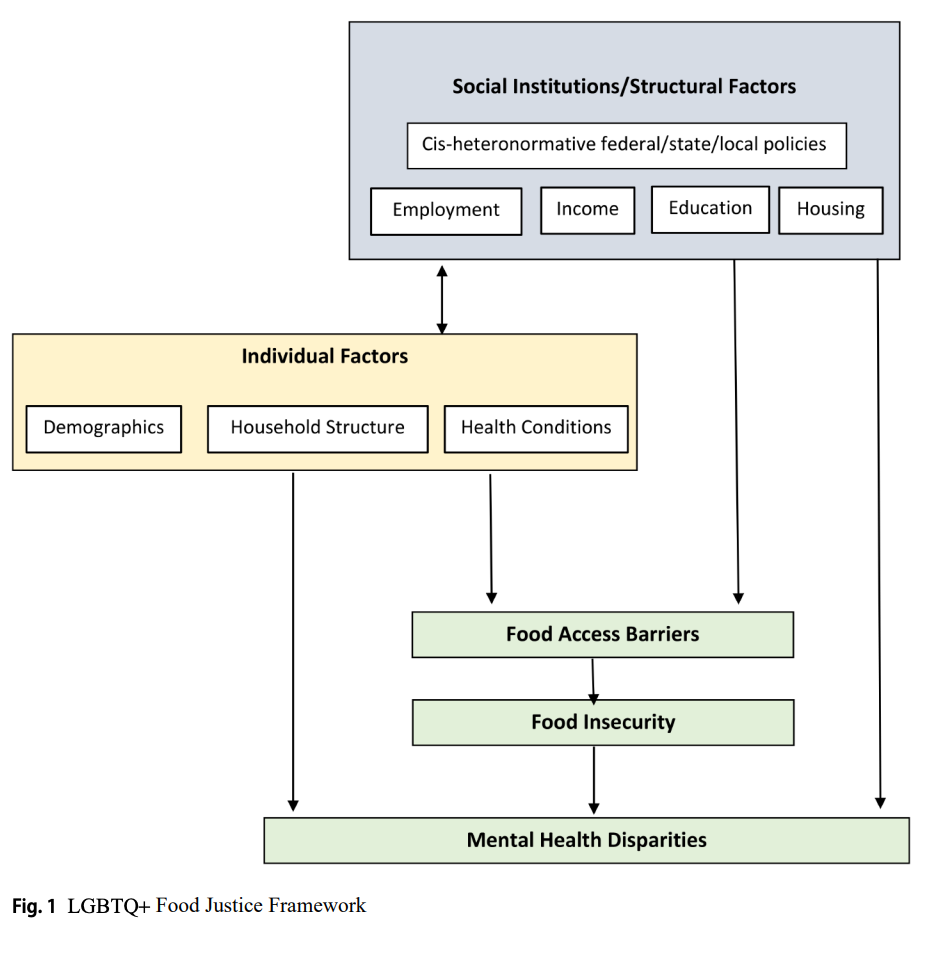
As seen in Figure 1, there are many avenues towards food insecurity. It is not just about issues the individual is facing, but also cis-heteronmative policies which may negatively impact the LGBTQIA+ community. This can include anti-discrimination policies which do not protect LGBTQIA+ people or religious nonprofits who decide not to serve the LGBTQIA+ community or make it difficult for LGBTQIA+ people to receive services. All of these policies and organizations impact the LGBTQIA+ community and lead to possible issues of food insecurity.
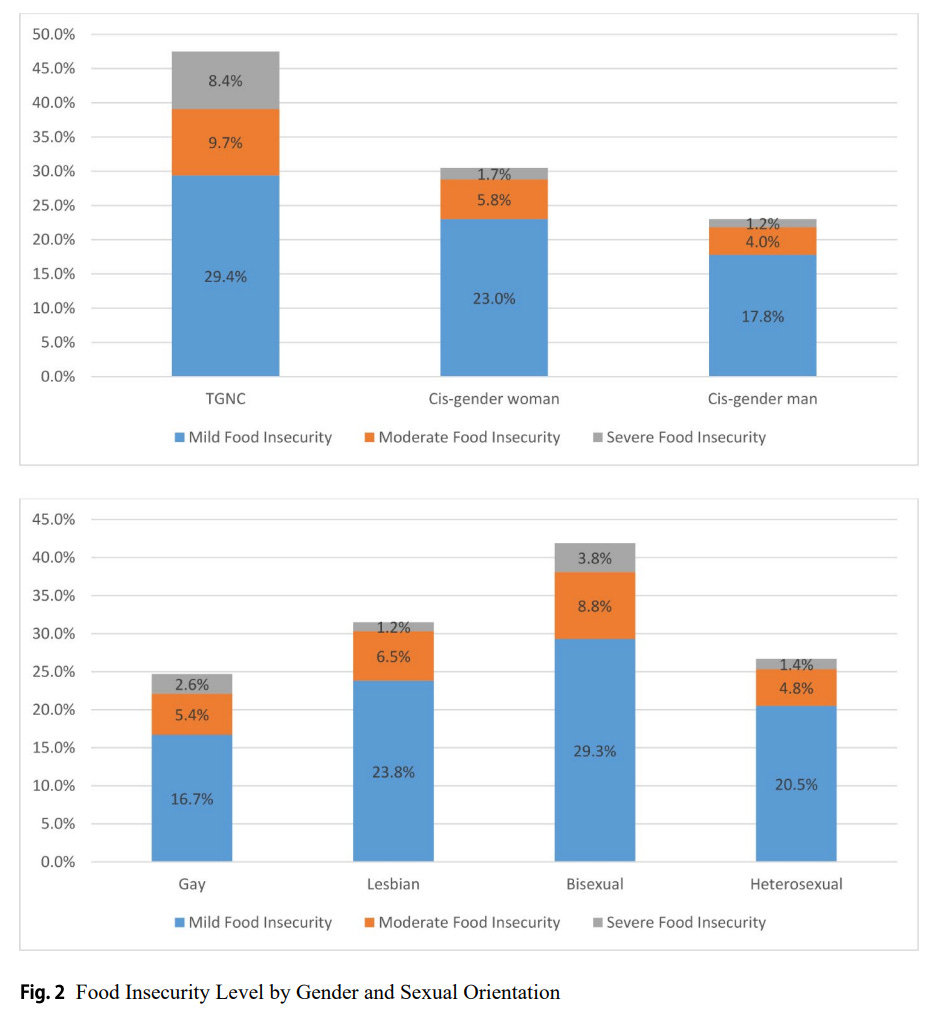
While it is not surprising to find a higher level of food insecurity for those who identify as trasngender/gender nonconforming compared to cisgender males and females, it was interesting that food insecurity for gay men was similar to heterosexual individuals. Instead, food insecurity for females and bisexual individuals was higher than heterosexual individuals. This shows that while the food insecurity issues within the LGBTQIA+ community and how it might differ based on identity. As a nonprofit, when talking about food insecurity, explore with clients why they might be having issues. This might include the difficulty of going to food pantries and other organizations that might be able to help, or the clients may not be aware of what organizations exist. It is important to remember that just because a service is available does not make it a safe place for the LGBTQIA+ community.
Supporting the queer community is complicated. It means understanding not only the community in general but also the diversity and intersectionalities. This allows you to understand how different communities interact with queerness. By examining research, we are able to see this clearly. I look explore research in a couple of weeks. Stay warm!