Research Rodeo 19

Hello everyone, and Happy Spring! It has been hectic around here as, over past two weeks, I have celebrated my daughter’s first birthday and my son’s sixth as well as hosted a nice seder for Passover. We are so lucky to have so many blessing, but I am also looking forward to a couple of quiet weeks before I am plunged into grading hell.
This week, in honor of an article of mine being published, I want to do a Research Rodeo. This week, I want to focus on my research, two other articles that just came out, and a book I recently finished. All of these provide differing insights into the ways nonprofits work with LGBTQIA+ communities and clients. Specifically, the research this week looks at social media, hookup apps, categorization of the LGBTQIA+ community, and how to make schools more affirming environment.
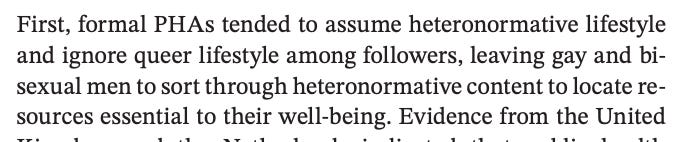
Wiley et al., (2026) Queering the Social Media Narrative: Influencers as Public Health Authorities: This is part of research Kim Wiley (University of Florida) and I have been doing around the ways that governments, nonprofits, and influencers used social media to relay information during the 2022 Mpox epidemic that impacted queer communities around the world. For this particular article, we are interested in how these three groups encouraged actions, such as getting vaccinated, Mpox prevention (or “Ho Responsibly” as one of our influencers put it), Mpox treatment, education, social action, and institutional action. We are especially interested in how outreach to queer communities looked as well, since gay and bisexual men were the most at-risk for Mpox. We found that for many LGBTQIA+ people, influencers were Public Health Authorities (PHAs) similar to nonprofits and governments, and unlike formal PHAs, spoke to the queer community in queer terms. We also found that influencers bridged between nonprofits/governments and queer individuals:

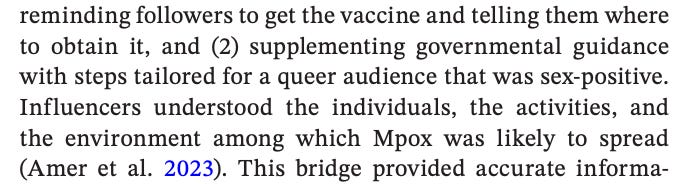
If you are doing outreach to the LGBTQIA+ community, influencers can be your allies and help you get your message out. Understanding how influencers get attention and their agenda can help organizations work with this group of people, some of whom are trusted within minoritized communities. When groups are distrustful of the government, influencers can help build bridges, provide information, and fight against conspiracy theories/disinformation. But it requires nonprofits and governments to create and maintain these relationships with influencers.
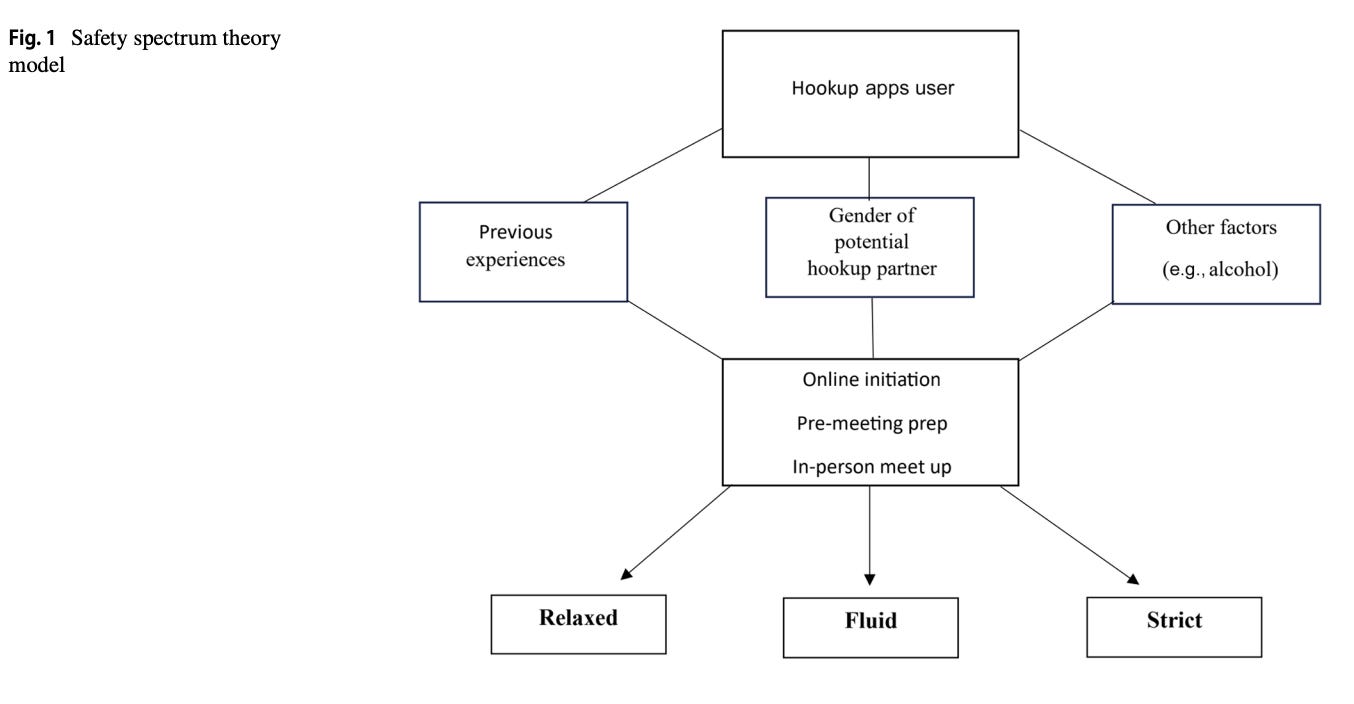
Babcock et al. (2024) How LGBTQ+ Young Adults Navigate Personal Risk in App-Based Hookups: The Safety Spectrum Theory Dating and hook up apps are a big part of queer culture. There are many apps, including, but not limited to Tinder, Hinge, Grindr, Bumble, Her, Scruff, and Sniffies. Each one has a different focus, whether it be open to everyone or specifically queer, looking for relationships or solely for quick hook ups. With stories of people praying on those they meet on the apps (e.g. here and here), it is important for queer people to have an understanding of safety issues which are associated with hookup and dating apps, especially young adults. In this article, Babcock looks at the safety planning young adults do when meeting people from the apps.
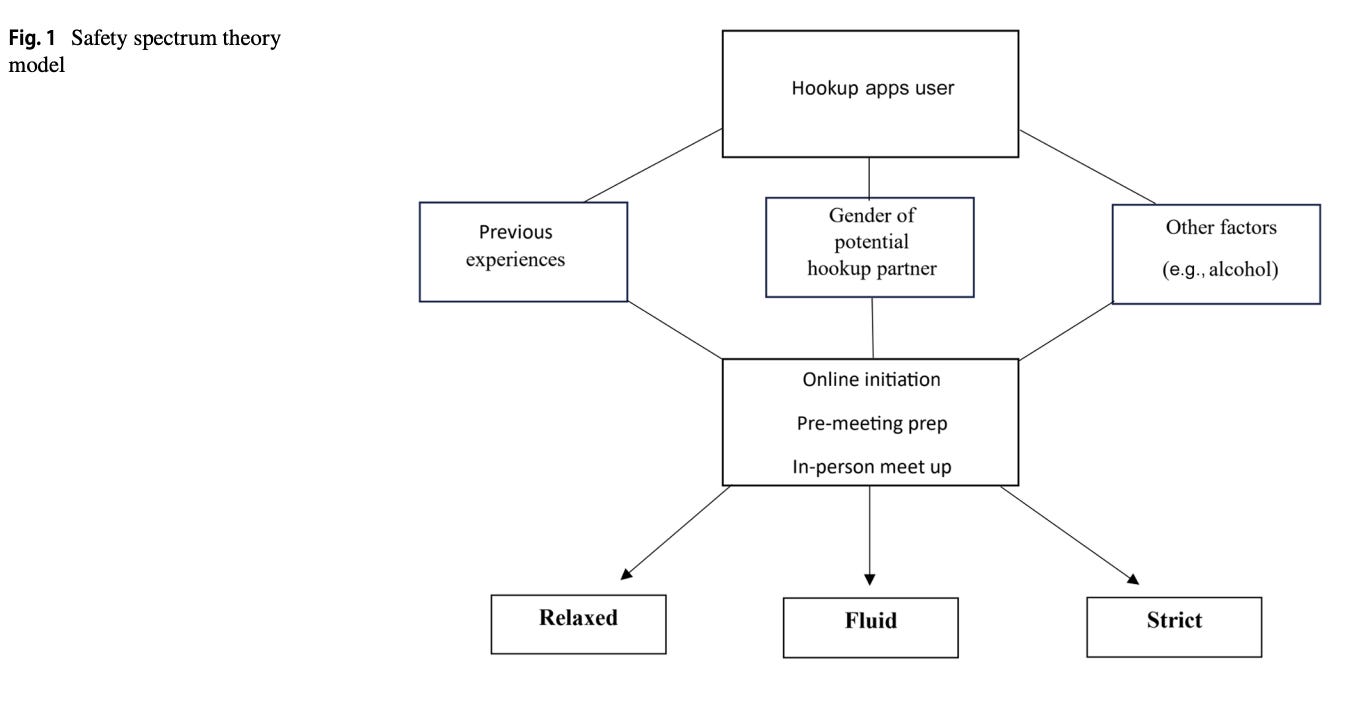
Based on the different factors listed above, the authors find there are three types of safety approaches: relaxed, fluid, and strict. When working with young adults who are starting to explore apps as a way to meet other queer people, it is important to discuss safety with them and explore what the young adults can do to make sure they are aware of the risks and the realities of dating/sex apps.
Guyan, K. (2025) Rainbow Trap: Queer Lives, Classifications and the Dangers of Inclusion. Guyan’s new book, Rainbow Trap, looks at the ways that classification systems trap individuals within systems. Specifically, categories have a habit of “(t)ransforming the queer body and its experiences into classification-ready data calcifies messy and contradictory traits. This transformation buffs the rough edges and presents a tidy whole” (Guyan, 2025, 7). By exploring several different areas of government and life, including immigration, dating, and culture, Guyan explores how the rainbow trap limits our understanding of the LGBTQIA+ experience and excludes those who do not fit into the classifications systems. Through this book, nonprofit professionals can consider the classification systems we have and who do they serve? Are they providing information about everyone and, if not, how can we make sure that we work to include individuality in our classification system. Through this, we can truely queer the system.
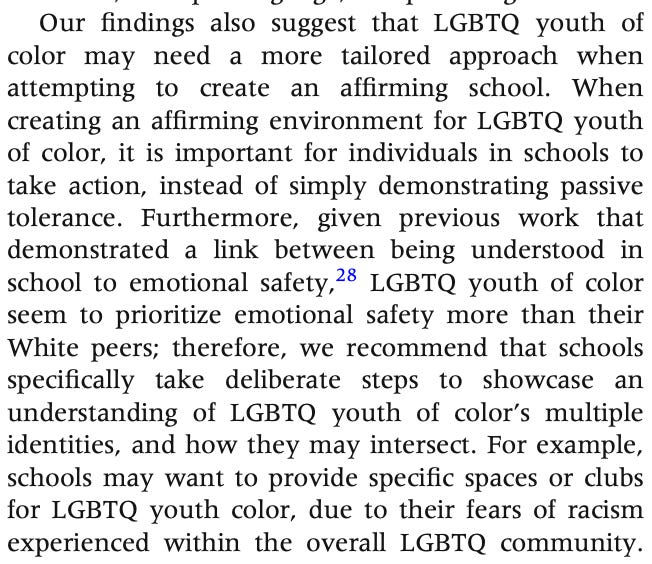
Price et al. (2025) Middle and High School LGBTQ Students Report What Makes School LGBTQ-Affirming Across Race/Ethnicity and Gender Identity, a Topic Modeling Method In this article, Price et al ask the simple question: what makes LGBTQ students feel that their schools are LGBTQ-affirming. This is important because, according to this study, students at LGBTQ-affirming schools have a significantly lower level of suicide ideations and suicide attempts than those at schools that are not LGBTQ-affirming. Price et al. find that there are many things which a school can do to be more affirming, but importantly, these approaches need to be holistic. This means training for teachers and administrators as well as work on putting up Pride symbols and creating special clubs for LGBTQ youth. For those who identify as an LGBTQ youth of color, compared to their white counterparts:
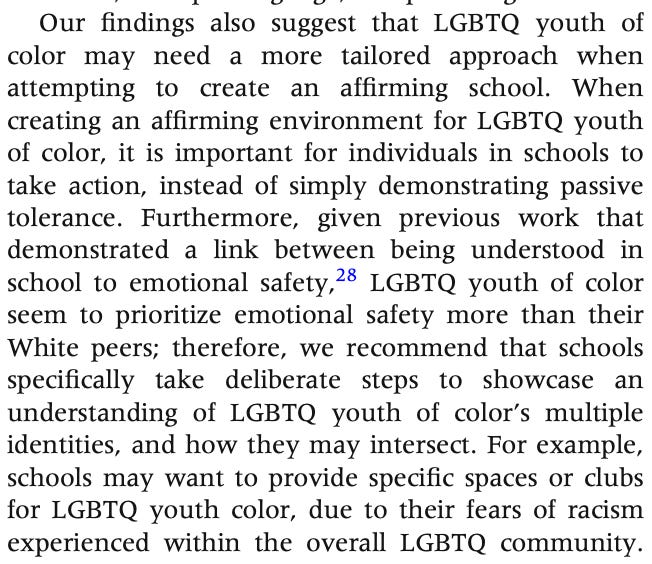
It is important to remember that LGBTQ youth of color may have different expectations and experiences than their white counterparts. In this study, for LGBTQ youth of color, there was a focus on emotional safety and and on actions as opposed to symbols. Schools and nonprofits should make sure that all of the symbols also lead to action to support the LGBTQIA+ community.
As always, let me know if you would like a copy of any of these articles (or any other research you find). I am always happy to share my work as well. The more research that we can get out to everyone, the more information that nonprofit professionals have to better serve their community!